Two weeks ago, I had the pleasure of speaking at an end-of-year gathering of student veterans here at Syracuse University. The week leading up to this event had included some personally challenging issues for me, and for that reason the task of considering what message of value I might share with these student-veterans took a turn toward something more personal and self-reflective, a contrast to what is my traditional norm and custom (and usual comfort).
In the time since that speech, and given that a great many veterans are graduating from America’s colleges and universities this month, more than a few of the event’s attendees have reached out and encouraged me to share my words from that evening with other veterans. Those words – thoughts and self-reflections on the meaning of my own transition from military life – are (somewhat reluctantly) presented below.
By: Dr. Mike Haynie
 Good evening, and thank you all for the opportunity to celebrate with you tonight.
I’ll make one promise right from the outset of my remarks – that is, I promise not to spend too much time behind this podium. Tonight I’ll take a cue from President Roosevelt’s playbook when it comes to giving a speech. Roosevelt said the objective of good public speaking is to “be sincere, be brief, and be seated.” You have my word that I’ll be seated very soon!
As I considered what to say tonight, my initial thought was to speak about the much discussed topic of navigating the different pathways of transition from military to civilian life, as if I know something about what that means for all of you.
This is a topic I’m asked to speak about often. However, truth be told, in front of this group – in front of family – I’d feel like a phony having that conversation. I say that because any words and thoughts I’d ascribe to that issue, would imply that I know something about what that journey looks like, and how you all should proceed.
Truth be told, if I can share my own vulnerabilities, I’ll say honestly and candidly – in a way that’s NO different from many of my fellow veterans in this room – that I’m still on that journey myself.
I say that because what’s most ironic about my post-service journey, particularly given my current role at Syracuse University as Vice Chancellor for Military and Veteran Affairs, is that when I came to SU in 2006 – after 14 years of active duty military service – I was honestly and truly running away from my military-self. For my own reasons, that maybe I’ll share on another day, I was done.
I’ve said before that I decided to leave the military because I wanted to be a college professor, which on the surface is a true statement. However more deeply, I was motivated to chase something that I had once found, and then lost. Put differently, more and more I found myself grieving for what I was, before the military made me something different. Not worse, in many ways better, but certainly different than the very carefree ‘kid’ I was on the day I was commissioned.
That might be a sentiment that resonates with some of you in this room.
You see, for many people the natural process of growing-up – perceiving and internalizing a sense of responsibility and accountability for yourself and others – is something that happens gradually and incrementally over time. But it didn’t happen that way for me, just like it didn’t happen that way for many of you.
They put 2nd lieutenant rank on my shoulders when I graduated from college, and I assume at that same event someone probably gave a speech about how and why this transition from cadet to officer will change my perspective on life. I say that I assume, because I’m sure I wasn’t listening.
Truth be told, some 5 or 6 years into my military career, in my mind I was still that same college kid. I didn’t take too much, too seriously. I had no idea what I wanted to ‘be’ when I grew up, because I didn’t really understand what ‘grown-up’ meant.
Don’t get me wrong, I was proud of my service, and worked hard to do the best job I could, with whatever task the military handed me. However I didn’t take the military, as seriously as the military took itself. And then, one day, all that changed.
It was a day and an experience that even now, I remember so clearly, so emotionally – and selfishly, a day and an experience that I remember with deep regret, for reasons that make me feel intensely guilty.
It was the summer of 2001, and I had recently arrived at the U.S. Air Force Academy to begin an assignment as member of the USAFA faculty. My boss had assigned me to teach introduction to accounting, which could only be described as pure torture. However, true to form I was determined that I was going to have some fun with this, even in spite of the fact that I learned very quickly that even ‘fun’ at the Academy has a way of going bad very quickly. So, in the face of overt disdain, ridicule, contempt directed at me by some of my fellow instructors, I proceeded to design an entire semester of accounting lessons around the exploits of Bart, Lisa, Homer, and the rest of the Simpson family. The cadets loved it, but my boss, not so much. It was perfect.
My class started at 0730 each morning. Just a few weeks into the fall semester of 2001, I was in the office early to put the finishing touches on the daily balance sheet for the Springfield Quikimart – when out of the corner of my eye I caught the news playing on the TV. A civilian airliner had impacted the World Trade Center.
Word came very quickly to us that this wasn’t an accident, and I rushed down to my classroom to be with my students. I arrived to find 40 scared, angry, and confused cadets. In a way uncharacteristic for a ‘Haynie classroom,’ nobody was speaking – it was dead quiet. We sat together in silence, watching the TV, and then watching as a second plane hit the second tower. One cadet finally broke the quiet, and she said, “Captain Haynie, this is going to change everything, isn’t it?”
Without really processing what she had said, I responded “for all of you…forever.”
For me, that’s when it happened. That’s the first time I actually remember feeling like an adult. At that moment I recall perceiving, for the first time, social and psychological ‘distance’ between myself, and the 21 year-old kids I was teaching.
Importantly however, in that distance, I also found profound personal meaning – and I realized that like for them, everything would change for me as well.
I say that – and share this story tonight – because for me, it was at that moment when my transition journey began. To be clear, it would be 5 more years before I actually took off the uniform. But without a doubt, my transition started that day, in that room. It started with those kids looking at me for answers, because it was at that point that I knew what form my life’s work would take. I was going to be a teacher.
The simple point I’m trying to make – and that I’d hope you reflect on as you consider where your post-military service journey will take you – is that we’re all transitioning all the time. Life is all about the transition – from somewhere, to someone…from today, to tomorrow. That said, I think many of us spend too much time and energy getting hung-up on the notion of ‘navigating’ the transition – particularly the transition from military-to-civilian life – as if the ‘transition’ itself is an end-state to be accomplished, rather than the means to something greater and more meaningful.
What I’m suggesting is that successfully navigating’s life’s transitions – particularly the transition from military to civilian life – actually has very little to do with mapping out the ‘right’ path: who you work for today, or tomorrow…where you’ll live…what school you’ll attend…or even whether you’re still wearing a uniform. Instead what I’ve learned, not always so gracefully, is that the most successful transitions are the ones where we act based on answers to ‘why’ questions, as opposed to ‘how’ questions; that is, we’re better served when we frame life’s transitions NOT as designing a process exercise to get us from A to B, but instead as a means to ask and answer the question, does getting to B even matter? Why?
In conclusion, my wish for all of you is that you don’t avoid opportunities for transition, but instead – borrowing words and sentiment from John F. Kennedy – that you enthusiastically embrace change and transition as the “law of life,” and come to understand why “those who look only to the past or present, are certain to miss the future.” Moreover, my hope for all of you is that you spend a bit less time and energy on obsessing about what is the ‘right’ pathway along your post-service journey, so that you have a chance to actually live meaning-filled lives along the way.
You have certainly earned that opportunity. Thank you and good night.

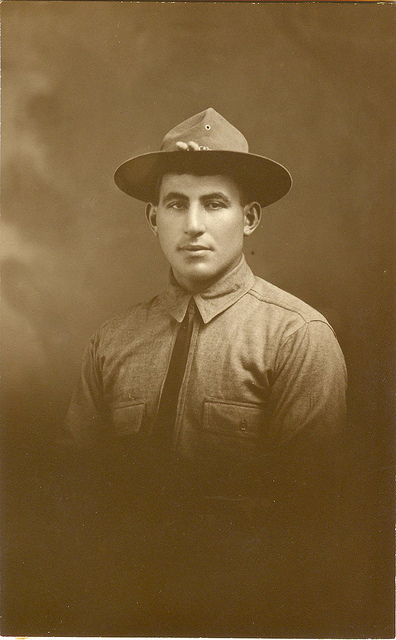
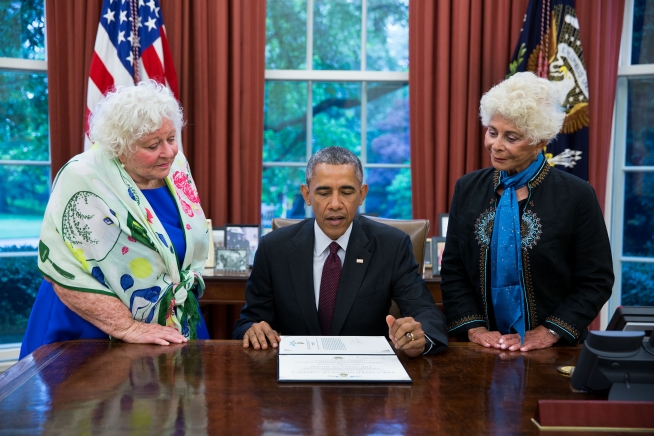 Sergeant William Shemin ’24, a graduate of the New York State College of Forestry at Syracuse University was posthumously awarded a Medal of Honor today at the White House. The award was presented to Shemin’s two daughters, Ina Shemin-Bass ’53 and Elsie Shemin-Roth ’51.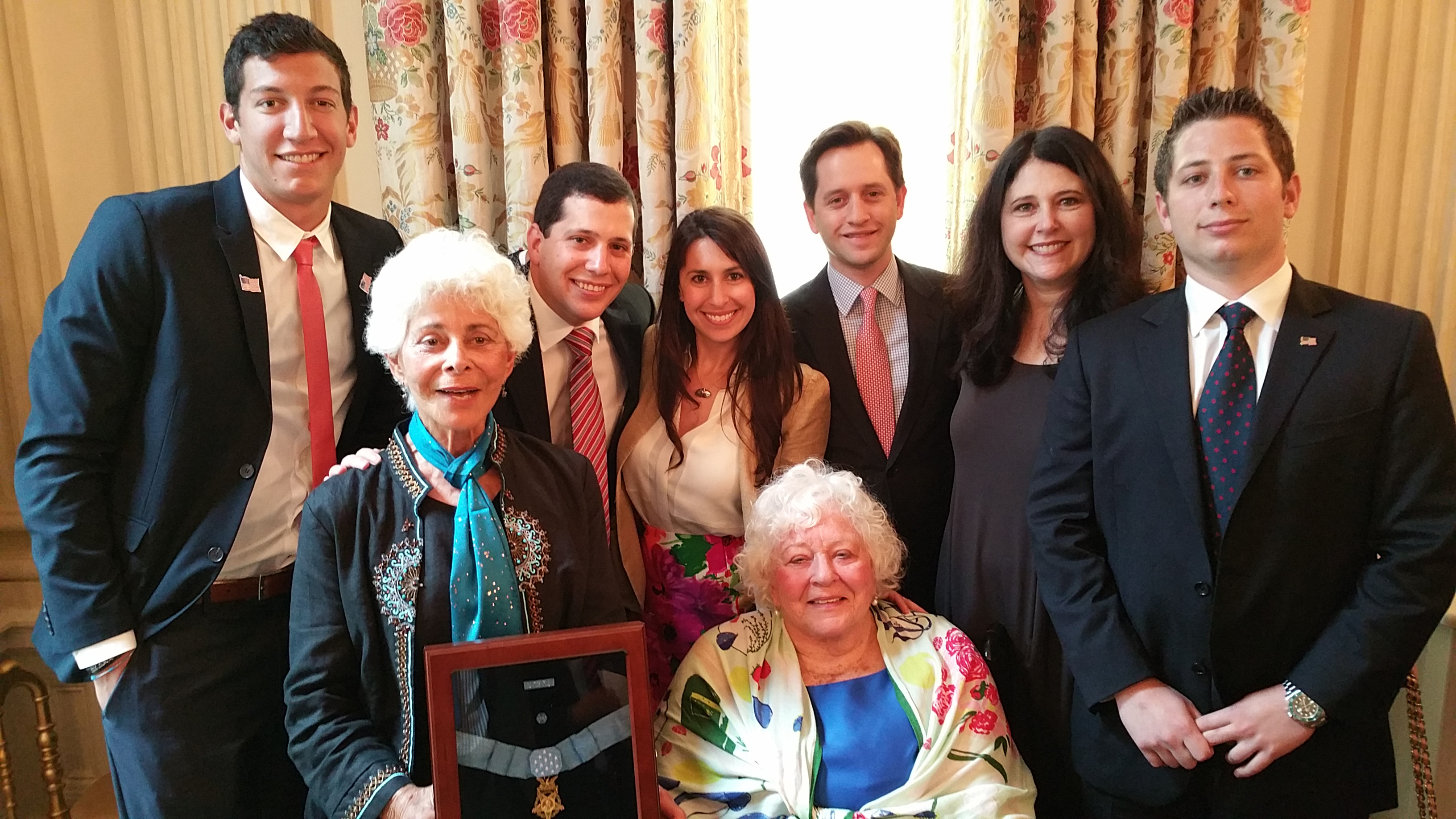
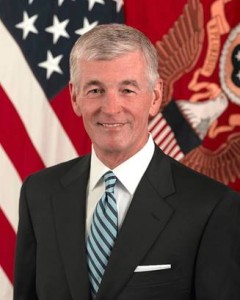 John M. McHugh, the 21

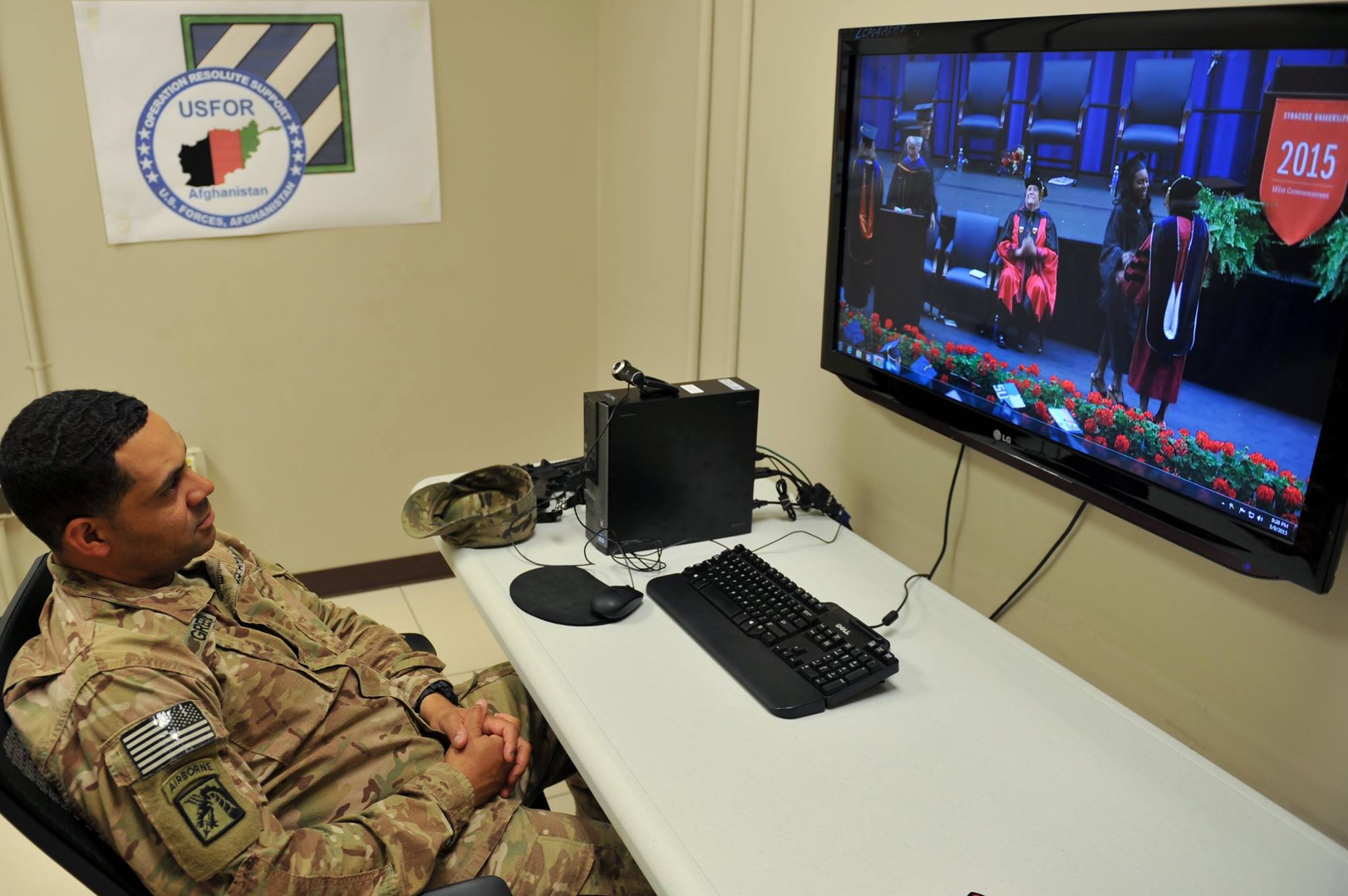
 Steve Kroft is an alumnus of Syracuse University, and also a military veteran. You should know his story, because it’s a Syracuse University story—one that speaks to our past, our present, and our future.
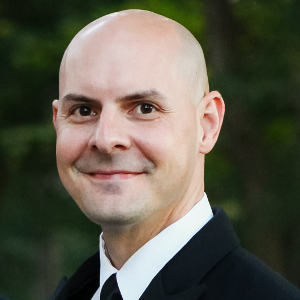 Chris Farlow is currently the Vice Consul of the United States in Almaty, Kazakhstan, and previously served as a diplomat in Ouagadougou, Burkina Faso and Washington, D.C. Prior to becoming a diplomat, he served eight years on active duty in the U.S. Air Force as an intelligence officer, including tours in Iraq and Afghanistan. He completed the MSSc program at Syracuse in 2009 and graduated from the University of South Florida in 2000. He continues to serve in the Air Force Reserve, as does his wife, Anne. He is originally from Bishopville, Maryland, and speaks English, French, and Russian.
 Joseph “Beau” Biden III is an alumnus of Syracuse University, and also a military veteran. You should know his story, because it’s a Syracuse University story—one that speaks to our past, our present, and our future.
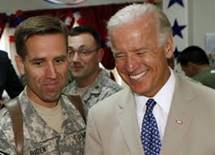 While working in the private sector, Biden joined the Delaware Army National Guard in 2003 as a member of the Judge Advocate General (JAG) Corps. Notably, he served as Interim Legal Advisor for the U.S. Department of Justice in post-war Kosovo, assisting in the development of a law enforcement and criminal justice system.
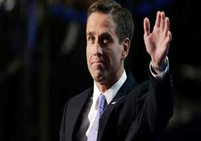 Notably, in 2011, Beau was honored with the Voice of Courage Award from Darkness to Light (D2L), a national nonprofit organization working to empower and teach adults to prevent child sexual abuse; and in 2013, Beau was awarded the LifeLock Ultimate Award for his efforts to fight identity theft, improve online safety and educate children about cybersecurity. Described by many, Beau Biden was a careful, cautious, and deliberate politician, who shunned the limelight to focus on the issues at hand.